
Spatial terminal canvas
Organize terminal sessions with pan, zoom, and drag. Keep context visible and navigable through spatial memory instead of tab archaeology.
TermCanvas is a visual terminal workspace built for parallel AI coding agents. Replace crowded tabs and split panes with a spatial canvas where Claude Code, Codex, Gemini, and other agents can run side by side with visible context.
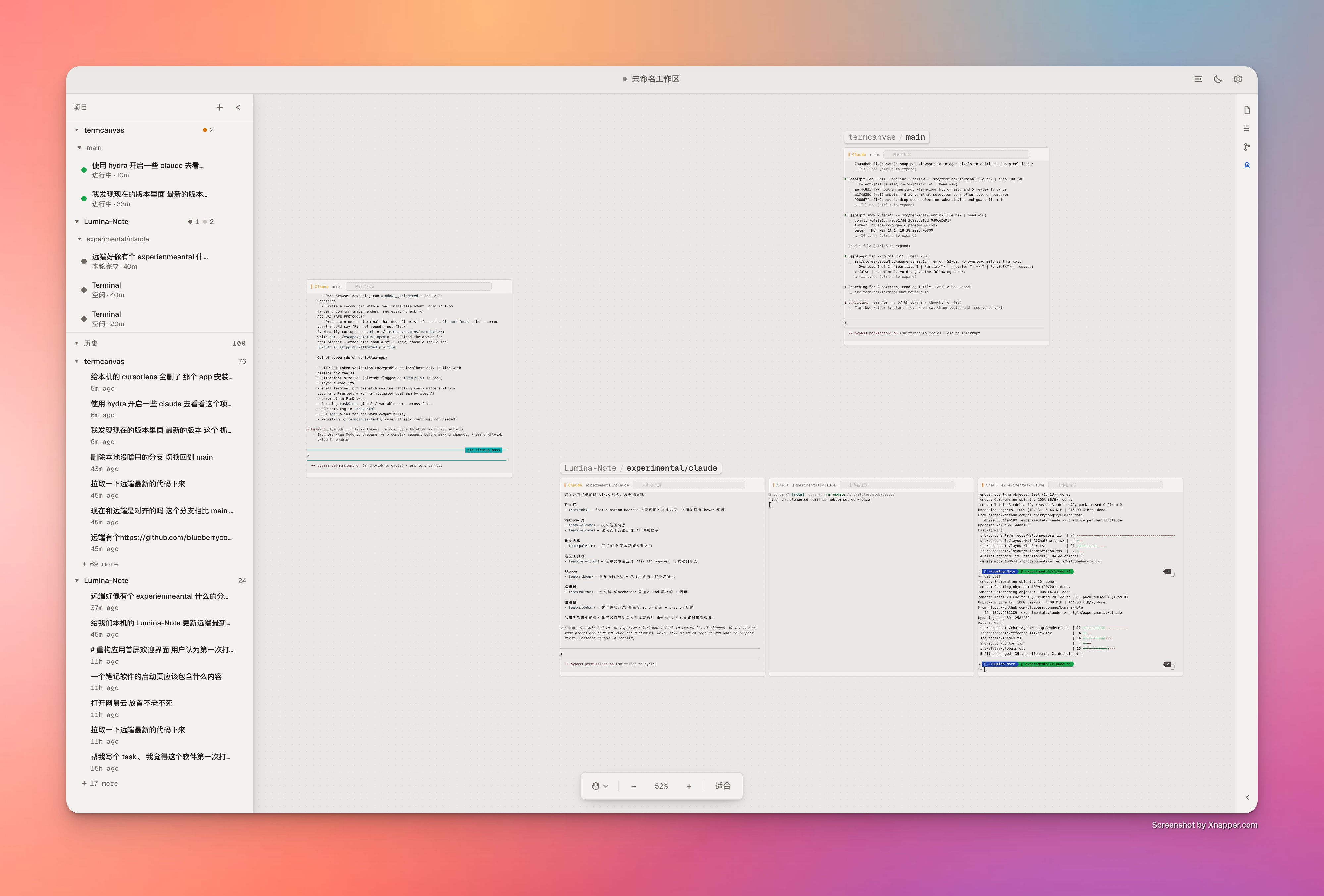
Organize terminal sessions with pan, zoom, and drag. Keep context visible and navigable through spatial memory instead of tab archaeology.
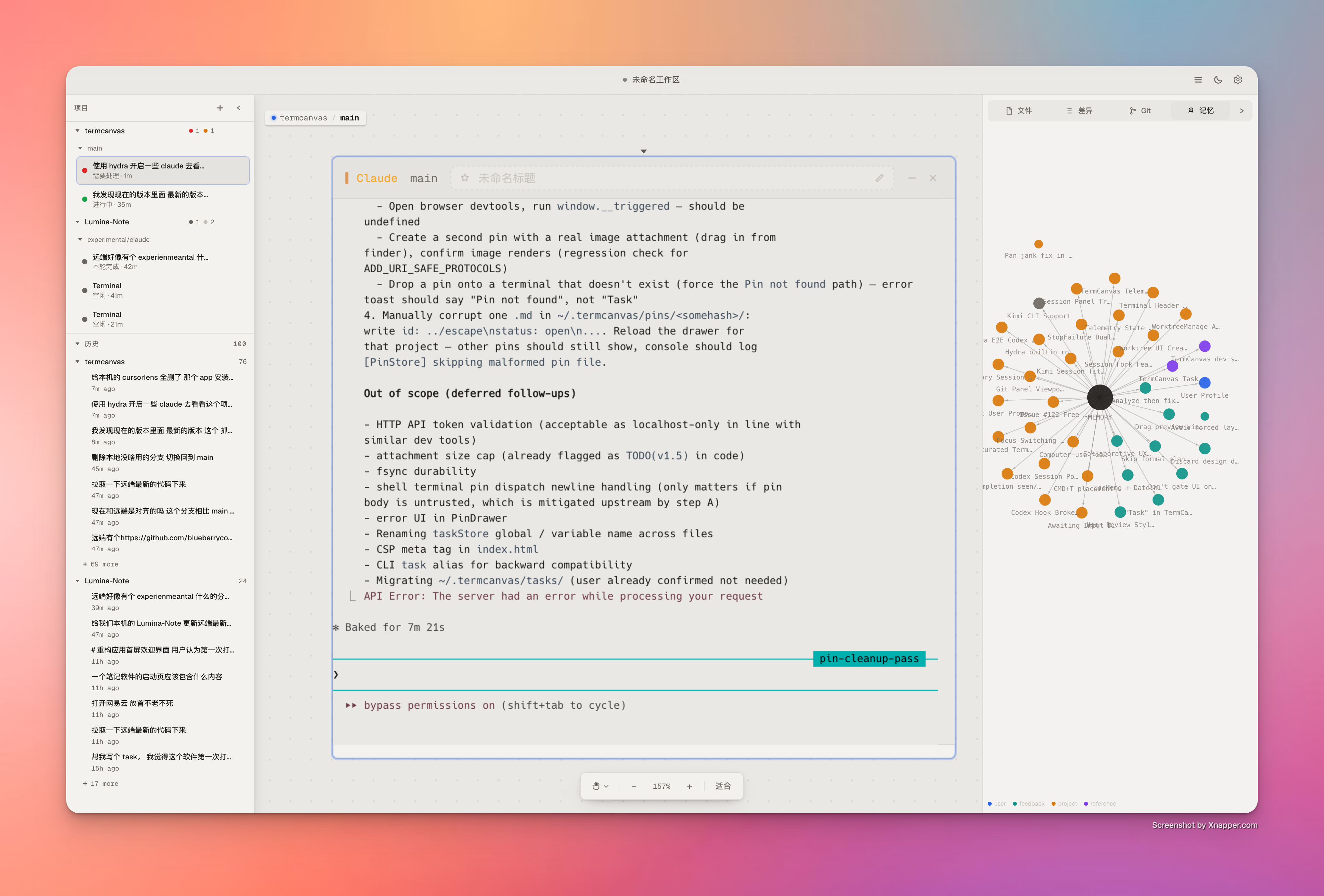
Run Claude Code, Codex, Gemini, Kimi, and OpenCode side by side. Each agent can have its own terminal, worktree, and visible status.
A lead-driven decider workflow for dispatch, watch, and merge loops. Hydra keeps long-running agent work structured without hiding decisions.
Keep screenshots, failing logs, judgments, and next actions beside the project. Pins can stay local or connect to Linear, Feishu, Notion, and GitHub Issues.
Turn local insight into a handoff packet that an agent, a human, or a Hydra headless pipeline can continue from. Long-running project context no longer disappears into chat logs and terminal scrollback.
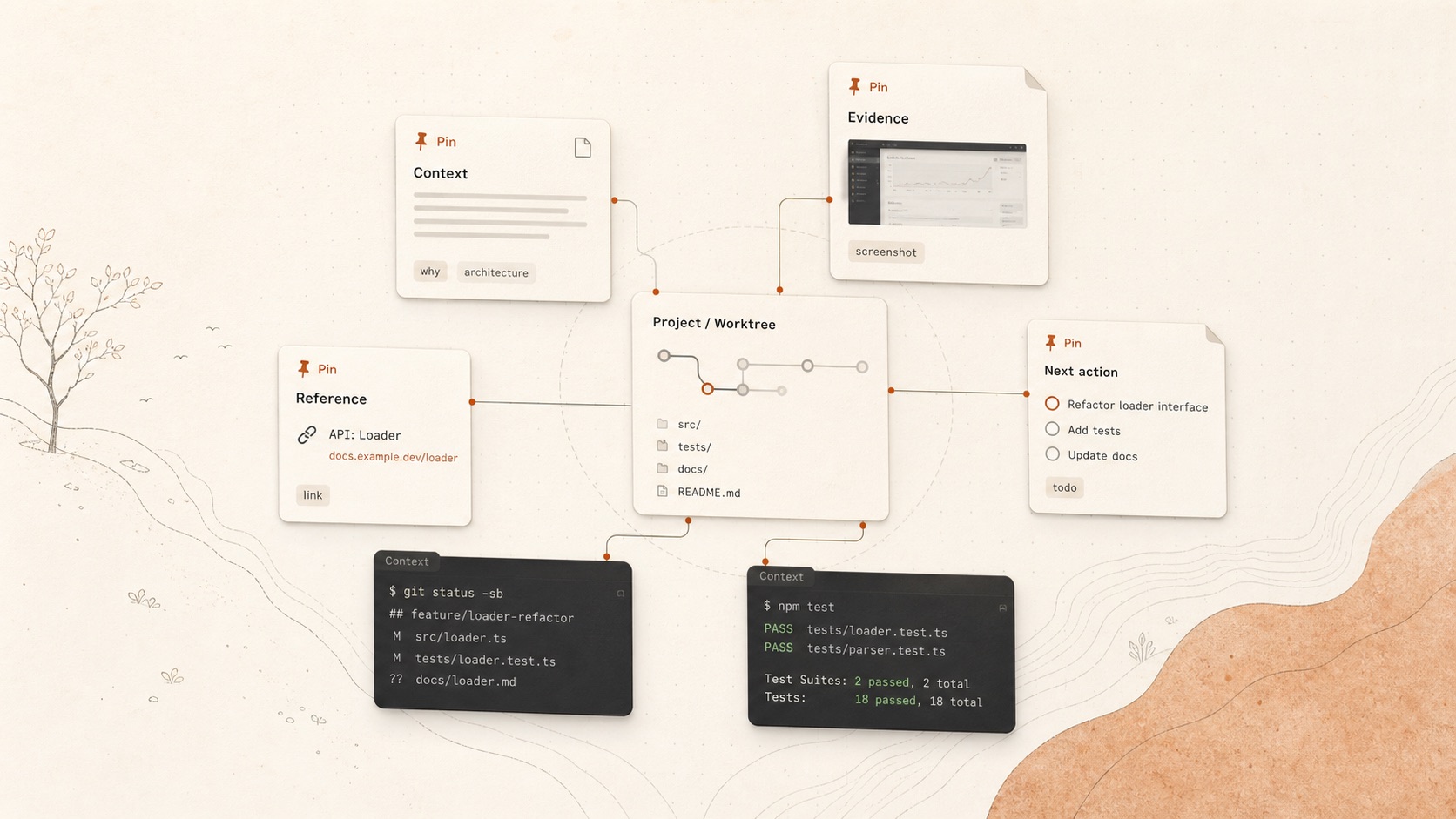
We did not need another bookmark list. We needed a way to keep problems, evidence, decisions, and next actions attached to the project while still connecting to shared systems.
Read article →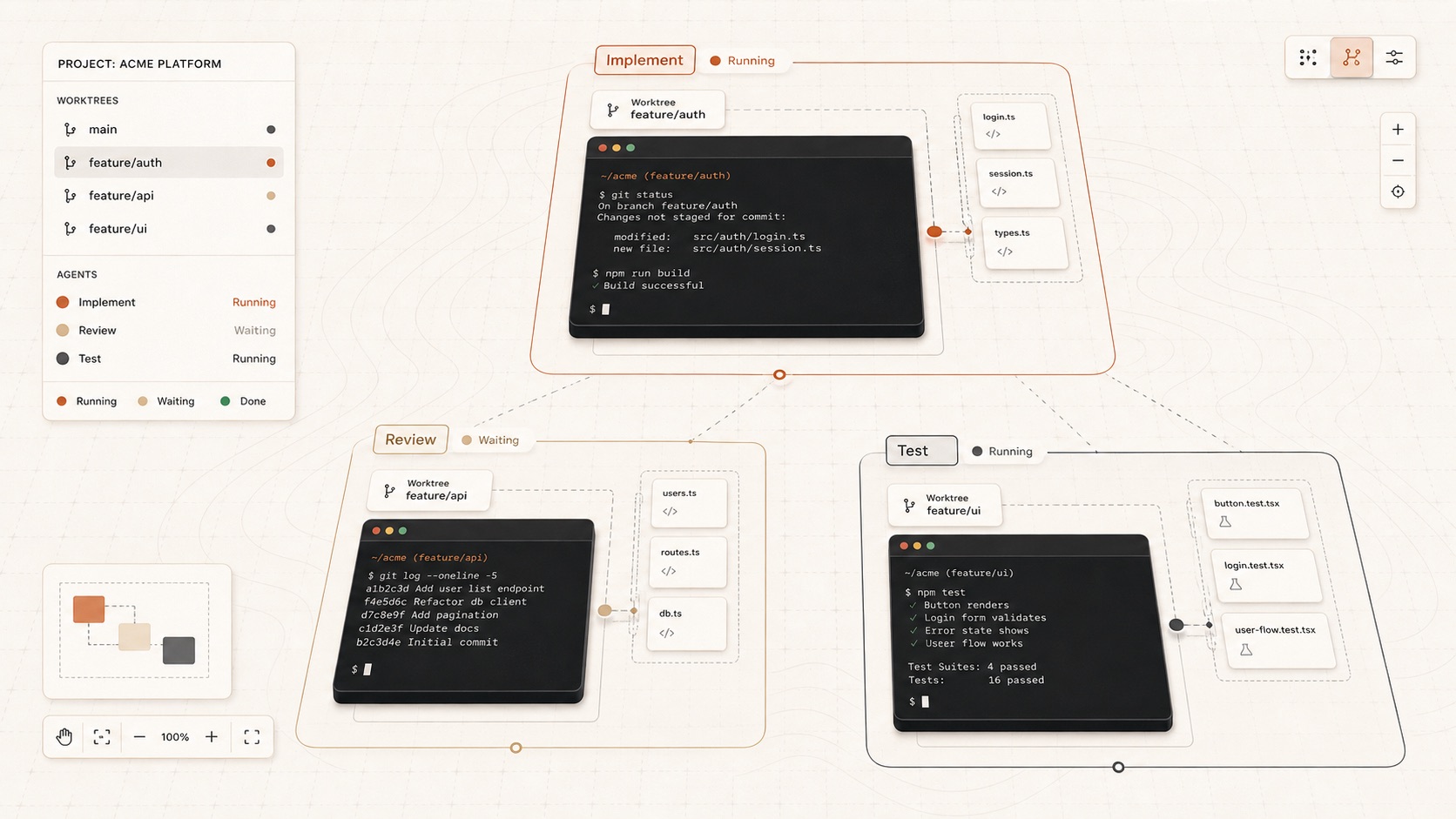
Tabs and split panes were designed for one human at a keyboard. AI coding agents create a different workspace problem: many long-running terminals, many worktrees, and context that needs to stay visible.
Read article →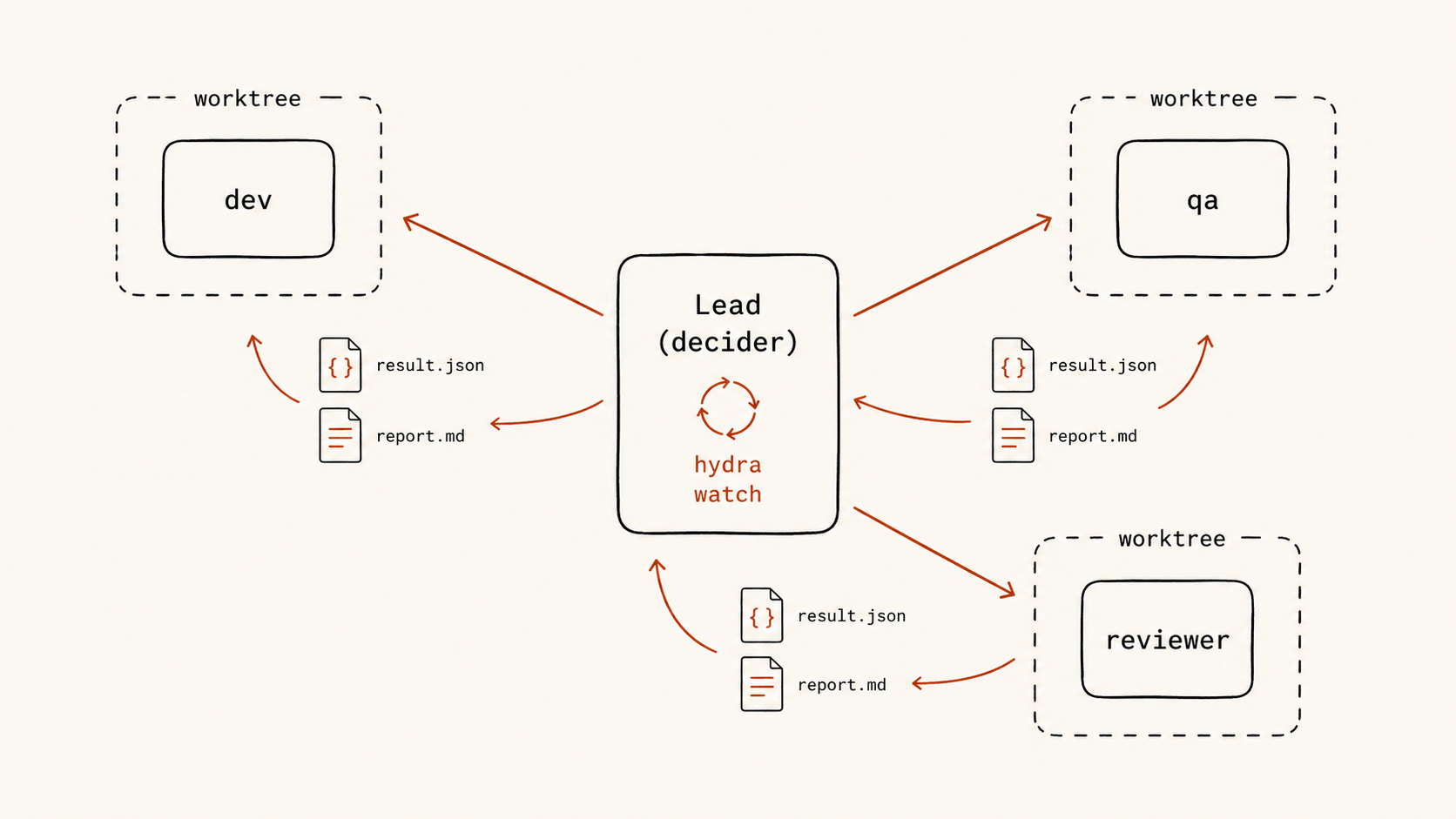
AI coding agents are useful because they can keep working, but long-running work needs structure: clear handoffs, visible decision points, and evidence that is stronger than a terminal message saying done.
Read article →